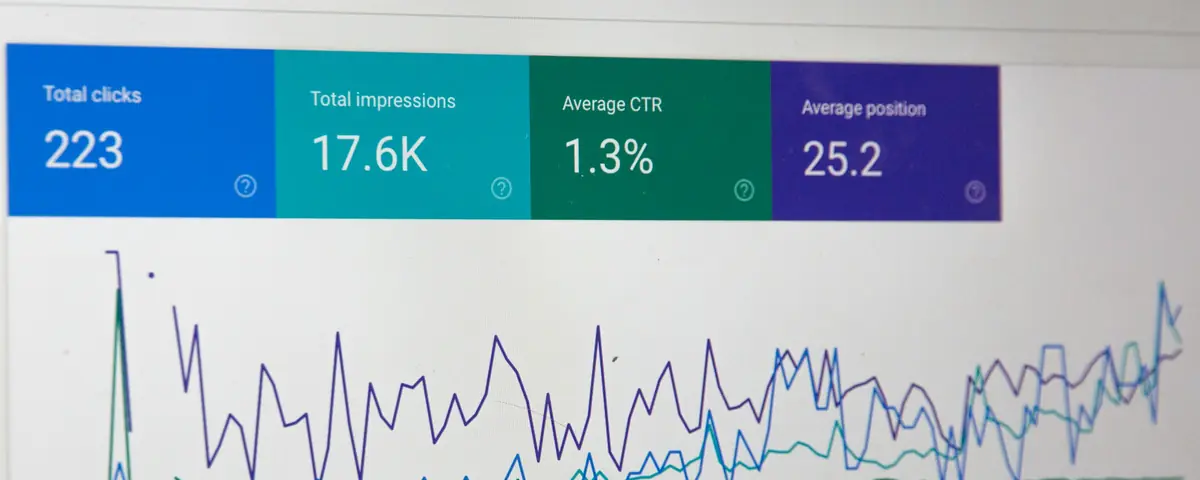
On September 24, Google launched a global spam update, in all languages, whose rollout can last up to two weeks, meaning until around October 8. Practitioners report impacts from September 25 to 27, then a second wave on September 30 and October 1, with strong volatility in Discover traffic. As long as the rollout is running, a traffic curve allows no conclusion: note the changes, change nothing in a rush, and compare once it is over.
Contents
On September 24, 2026 at 9:15 a.m. Pacific time, or 6:15 p.m. in France, Google launched its September spam update.1 It applies to all sites and all languages, and its rollout can take up to two weeks, whereas the three previous spam updates of 2026 announced a few days.1 That duration leads to around October 8. During this period, traffic that drops, recovers, then drops again matches what Google announced, and this note details what is confirmed, what is observed and what a business can do in the meantime.
01What Google announced
The announcement fits in a few lines: a launch date, a scope and a duration.
A longer rollout than usual
Google's Search Status Dashboard lists the “September 2026 spam update” incident with September 24 as its start date.2 Google writes that the rollout may take up to two weeks, and John Mueller confirmed it would probably be longer than some of the previous ones.3
During a drawn-out rollout, two sites hit by the same update can see their curves change several days apart, as the two waves described below show.
What Google asks of sites
Google invites the sites concerned to review its spam policies, and specifies that those that violate them may lose rankings or disappear from the results.1
Search Engine Roundtable adds that the update only targets sites that spam, with the usual caveat of possible collateral damage for other sites.3
02The waves observed, from September 24 to October 8
Practitioners and volatility tracking tools describe a rollout that came in bursts. The table separates what Google confirmed from what comes from observations.
| Date | What is reported | Status |
|---|---|---|
| September 23 and 24 | instability picked up by tracking tools, before the announcement | observed |
| September 24 | launch of the update, at 9:15 a.m. Pacific time | confirmed by Google |
| September 25 to 27 | first impacts, clearest movement on Saturday the 26th | observed |
| September 30 and October 1 | second series of drops reported by site owners | observed, not confirmed |
| Throughout the rollout | strong volatility in Discover traffic | publisher accounts |
| Around October 8 | end of the rollout at the latest, two weeks after launch | duration announced by Google |
The first impacts, September 25 to 27
Search Engine Roundtable describes a marked impact from Friday the 25th, even more movement on Saturday the 26th, then a pullback on Sunday the 27th. More than a dozen tracking tools recorded the rise in volatility.4 Instability had already been noted on September 23 and 24, before the announcement.5
Glenn Gabe reports drops across several sectors and several countries, and Lily Ray, quoted by the same site, mentions sites with heavily templated pages that were probably produced by AI, with for example one page per phone area code.4 On October 1, Google published guidance on reviewing AI-produced content.
The second wave, September 30 and October 1
On October 1, Glenn Gabe described a new series of drops: several site owners wrote to him that they had seen a sharp decline on September 30.6 This second wave rests on practitioners' observations.
Discover, the most unstable
Several publishers report strong volatility in Discover traffic, some describing traffic that almost vanished at times.6 These are publisher accounts.
03What to do during the rollout
The general rule is not to react to a curve until the rollout is over. Google's documentation points the same way, and it gives the method for reading the changes afterwards.
Change nothing in a rush
Google reminds site owners that small ranking changes happen all the time, and advises against radical changes to a page that is performing well. It also states that the effect of a change can show up in a few days or in several months.7
Compare once it is over, over whole periods
To measure a drop, Google recommends comparing the last three months with the previous period, or with the same period last year, then looking at which queries, countries or devices changed.7 Starting now, note the date and size of each change: you will then be able to place them on the timeline above.
If the drop persists
Review Google's spam policies. Google says changes can help a site if its systems observe, over several months, that the site complies with them.1 Search Engine Roundtable speaks of a recovery that can take many months.3
For a site that publishes many pages, the section on scaled content abuse is the first to reread.8 A persistent drop does not necessarily come from the update: a technical audit of a site, from crawling to indexing, rules out the ordinary causes.
Fabricated author profiles, which Google's page on helpful content has called deception since October 1, are another point to check.9